

Table of Contents
- Motorcycle Jacket Safety Standards Explained: EN17092 and Beyond
- What Does CE Rating Mean for Motorcycle Jackets?
- How to Check Motorcycle Jacket Abrasion Resistance at Home
- Leather vs Textile Abrasion Resistance: Which Lasts Longer?
- How to Maintain Your Jacket for Long-Term Abrasion Resistance
- Frequently Asked Questions
Last Updated: September 14, 2026
Motorcycle Jacket Safety Standards Explained: EN17092 and Beyond
Motorcycle jacket safety standards are the testing frameworks that determine whether a garment will actually protect you when you slide across asphalt. The European EN17092 standard is the benchmark most manufacturers now build to, replacing the older, patchwork Cambridge and EN13595 schemes that left gaps in coverage. This guide from BikerThreadsHQ breaks down what those ratings mean, how the tests are run, and how to check motorcycle jacket abrasion resistance yourself before you trust a jacket with your skin.

The core idea is simple: a jacket earns its rating by surviving a machine that drags it across abrasive grit at speed, then measuring how long it takes to wear through. Everything else, the denier of the fabric, the type of leather, the stitching, feeds into that one outcome. As the European Committee for Standardization overview of PPE standards explains, EN17092 was written specifically to give riders a comparable, honest label across every brand.
Here's the part most guides get wrong: a CE badge on the armor is not the same as an abrasion rating on the shell. You can have a jacket with excellent shoulder and elbow protectors that still shreds in seconds because the outer material is thin. The two ratings measure different things, and you need both.
What Does CE Rating Mean for Motorcycle Jackets?
A CE rating on a motorcycle jacket means the garment has been tested against a recognized European safety standard and assigned a performance level. For abrasion resistance specifically, EN17092 sorts jackets into three main classes: AAA, AA, and A, plus a lighter B and C tier for specialized gear. AAA is the highest, built for track and high-speed road use. AA covers most general riding. A is the minimum for genuine road protection.

The confusion comes from the fact that "CE" gets slapped on two different things. CE Level 1 and Level 2 refer to the impact protectors, the foam and hard-shell pads in the shoulders, elbows, and back. The EN17092 class refers to the jacket as a whole, including how long the outer shell resists abrasion. A jacket can carry CE Level 2 armor and still only rate EN17092 Class A. That's a legal, protective garment, but it is not the same as a AAA touring jacket.
How EN17092 Classes Are Actually Determined
The EN17092 class is not a single pass/fail test. It is a performance band based on two lab measurements: abrasion resistance and seam strength. In the abrasion test, a sample of the jacket's outer material is mounted on a machine and dragged against abrasive grit under a controlled load. The machine records how many seconds or cycles the material survives before a hole forms. The seam strength test pulls stitched panels apart to measure how much force the seams can take before they fail.
Each class corresponds to a minimum performance threshold. AAA requires the highest abrasion time and seam strength, AA is the middle band, and A is the entry level for road use (pubmed.ncbi.nlm.nih.gov). Classes B and C are narrower categories: B is for garments that meet abrasion and seam requirements but may not include impact protection, and C is for lightweight or specialized gear that meets a lower threshold. The exact thresholds are set in the standard and verified by accredited test houses, not by the manufacturer's own marketing department.
Reading the Label Without Getting Fooled
When you're reading a spec sheet or a jacket label, look for both numbers: the EN17092 class for the shell and the CE level for the armor. If a listing only says "CE approved" with no class, treat that as a red flag and ask the seller for the full EN17092 classification. A legitimate label will state something like "EN17092-3:2020 Class AA" and separately list "CE Level 2" for the protectors.
A common pattern is that budget jackets advertise "CE armor" prominently while burying the shell rating in fine print. That is not necessarily dishonest, but it tells you where the protection budget went. For real-world riding, you want both: a shell that will survive a slide and armor that will absorb the impact. If you have to prioritize, the shell rating matters more for abrasion resistance because armor does nothing if the jacket shreds before you stop sliding.
How to Check Motorcycle Jacket Abrasion Resistance at Home
You can check motorcycle jacket abrasion resistance at home by combining a careful visual inspection with a few simple physical tests. You will not replicate a lab's Darmstadt machine, but you can spot the warning signs that a jacket is past its protective prime. Set aside twenty minutes, good lighting, and a notepad.
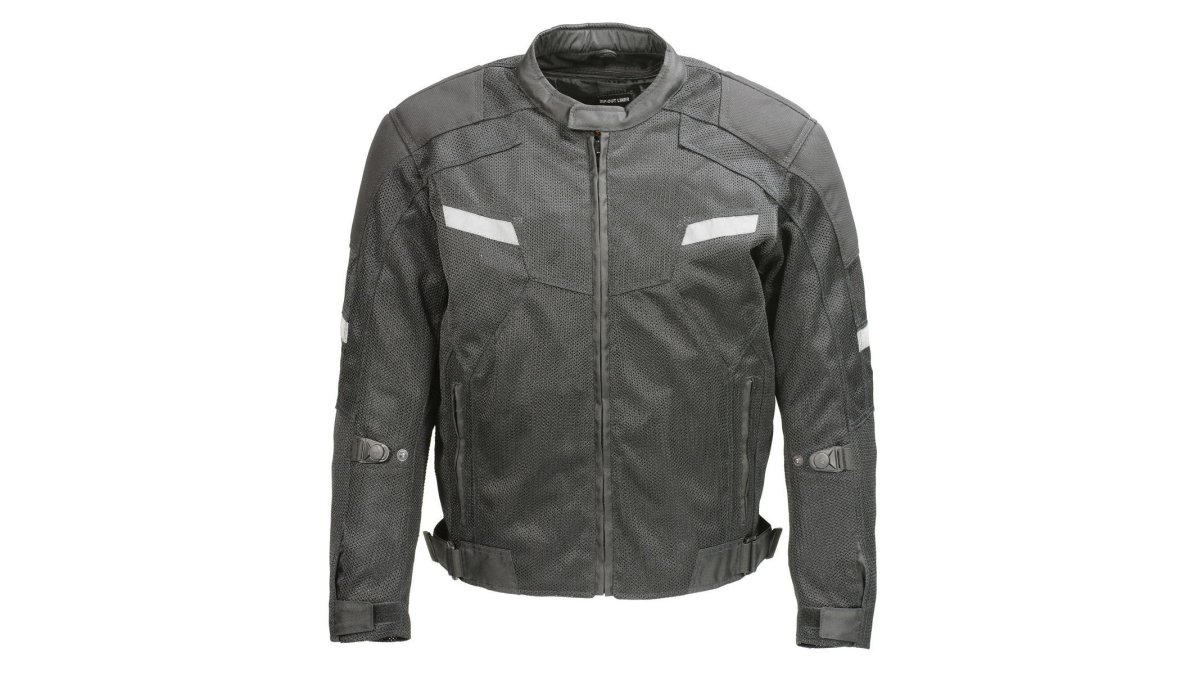
Start with the outer shell. Run your fingers along the shoulders, elbows, and forearms, the zones that hit the road first. Look for thinning, shine, or fuzziness where the fabric has started to break down. Then check every seam by gently pulling the panels apart; if the stitching gapes or you see loose threads, the seam integrity is compromised.
Visual Signs of Material Fatigue
Material fatigue shows up before a jacket actually fails, and catching it early is the whole game. Watch for these signals:
- Glazing or shine on leather or textile where friction has polished the surface
- Fuzzing and pilling on textile panels, a sign the synthetic fibers are breaking down
- Color fading in high-wear zones, often the first visible clue of abrasion
- Cracking or flaking on coated fabrics, which means the protective layer is separating
- Stretched or deformed armor pockets, which let pads shift out of position in a crash
- UV damage on leather, which appears as a dry, chalky surface and fine surface cracks that deepen over time
- Dry rot in leather, where the material feels stiff and brittle and may tear under light tension
- Fraying edges on textile panels, especially along cuffs, collars, and hem, where fibers unravel and reduce the effective thickness of the weave
If you see two or more of these on the same panel, that jacket has done its job and needs replacing.
DIY Home Inspection Methods
A few hands-on checks tell you more than a glance ever will.
- The light test: Hold the jacket up to a bright lamp. If light passes through a textile panel, the weave is too thin to trust.
- The rub test: Rub a hidden interior section firmly with a coin. Heavy surface transfer or immediate fraying signals weak material.
- The seam pull: Grip both sides of a seam and pull gently. Any separation means the stitching is failing.
- The weight check: Compare the jacket against a known-good one of similar size. A sudden lightness often means material has worn away.
- The flex test: Bend the elbow and shoulder areas sharply. Cracking sounds or visible white stress marks on leather indicate the fibers have lost flexibility and will abrade faster.
- The tape measure check: Measure the thickness of the outer shell at a worn area and compare it to a protected area like the back panel. A noticeable difference means the material has thinned.
Maintenance for Long-Term Abrasion Resistance
Inspection is only half the job. How you care for your jacket determines how long it holds its abrasion resistance. For leather, clean it with a dedicated leather cleaner, then condition it two to three times a season. Conditioning keeps the fibers supple so they resist cracking under friction. For textile, follow the manufacturer's wash instructions, use a technical fabric cleaner, and reapply any water-repellent finish once it stops beading. Never machine-dry either material on high heat; it degrades coatings and stitching.
Store your jacket on a wide hanger in a dry, ventilated space, away from direct sunlight. UV exposure breaks down both leather and synthetic fibers over time. Inspect the armor pockets and seams every few months, and replace any protector that has gone hard or cracked. A seasonal deep clean and condition, combined with a quick visual check before every ride, will catch most issues before they become safety risks.
Leather vs Textile Abrasion Resistance: Which Lasts Longer?
Full-grain leather generally outlasts textile in abrasion resistance, but the gap narrows fast at the top end. A thick, quality leather jacket can hold up through multiple slides that would destroy a budget textile shell (pubmed.ncbi.nlm.nih.gov). The reason is structural: leather is a dense, interlocked fiber network, while most textiles are woven or knitted, so they abrade at the yarn level.
That said, modern high-denier textiles are genuinely competitive. Denier measures the thickness of the yarn, and a 600-denier or higher synthetic shell with a good coating can rival mid-weight leather for slide time. The trade-off is heat. Textiles tend to be lighter, cooler, and more breathable, which matters on long rides, while leather offers better thermal resistance against road friction.
| Material | Abrasion Resistance | Weight | Breathability | Best For |
|---|---|---|---|---|
| Full-grain leather | Highest | Heavy | Low | Track, high-speed touring |
| 600D+ textile | High | Moderate | High | All-season road riding |
| Mesh textile | Low | Light | Highest | Hot-weather commuting |
| Waxed cotton | Moderate | Moderate | Moderate | Vintage and urban riding |
The honest answer is that material matters less than construction. A well-stitched, properly layered textile jacket beats a thin, poorly made leather one every time. Look at the whole package, not just the label.
How to Maintain Your Jacket for Long-Term Abrasion Resistance
Maintenance is what separates a jacket that lasts three seasons from one that lasts ten. The goal is to keep the outer shell's fibers and coatings intact for as long as possible. Most riders neglect this entirely, then wonder why their gear looks worn after a single year.
For leather, clean it with a dedicated leather cleaner, then condition it two to three times a season. Conditioning keeps the fibers supple so they resist cracking under friction. For textile, follow the manufacturer's wash instructions, use a technical fabric cleaner, and reapply any water-repellent finish once it stops beading. Never machine-dry either material on high heat; it degrades coatings and stitching.
Store your jacket on a wide hanger in a dry, ventilated space, away from direct sunlight. UV exposure breaks down both leather and synthetic fibers over time. Inspect the armor pockets and seams every few months, and replace any protector that has gone hard or cracked.
For riders who want gear built to hold its rating season after season, BikerThreadsHQ stocks CE-certified jackets designed for exactly this kind of long-term use, like the Horizon Motorcycle Jacket and the all-season Storm Motorcycle Protective Jacket. Both are built around a protective outer shell and adjustable armor, so the fit stays secure and the protection stays where it belongs.

Frequently Asked Questions
What is the difference between CE Level 1 and Level 2 abrasion resistance?
CE Level 1 gear is tested to withstand a certain impact energy and abrasion time, while Level 2 must handle higher energy and longer slide times. For abrasion specifically, EN17092 uses letters A, AA, and AAA to denote increasing resistance. Level 2 armor often accompanies higher abrasion ratings, but they are separate metrics. Always check both the armor level and the garment's EN17092 rating for a complete picture of protection.
How do I know if my motorcycle jacket is abrasion resistant?
Look for a CE label inside the jacket that references EN17092 with a rating of A, AA, or AAA. AAA offers the highest abrasion resistance. You can also inspect the material: full-grain leather and high-denier textiles like 600D or 1000D Cordura typically perform well. If there's no label, assume the jacket is not certified and may offer limited protection in a slide.
What materials offer the best abrasion resistance for motorcycle jackets?
Full-grain leather and high-denier synthetic textiles like 1000D Cordura are top performers. Leather naturally resists abrasion but can be heavy and hot. Textiles like Kevlar or Dyneema blends offer excellent strength-to-weight ratios. The best choice depends on your riding style and climate. Look for EN17092 AAA ratings for the highest level of abrasion resistance in either material.
Can I test my own motorcycle jacket for abrasion resistance?
You cannot replicate the Darmstadt test at home, but you can perform a visual inspection. Check for fraying, thinning, or shiny spots on high-impact zones like shoulders and elbows. Look for loose stitching or seams that have started to separate. If the jacket feels stiff or brittle, the material may have degraded. When in doubt, replace it; a professional lab test is the only way to get a definitive abrasion rating.
Your jacket is the only thing between your skin and the asphalt, so it deserves more than a glance before every season. BikerThreadsHQ builds premium riding gear for men and women who ride hard and want protection that holds up, from CE-certified armored jackets to all-season shells with removable liners and adjustable armor pockets. Browse the collection and gear up with confidence for every mile ahead.